For most campervans, the best wall and ceiling insulation is a breathable synthetic wool such as 3M Thinsulate, with rigid PIR board under the floor and in flat panels. The material matters less than the system: insulation, ventilation and gentle heating must work together or the van still gets condensation.
Which insulation material is best for a campervan?
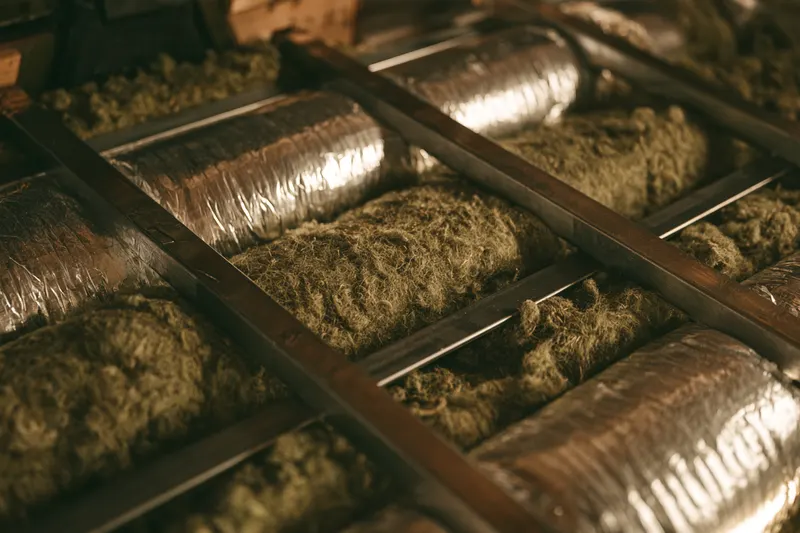
Synthetic wool such as Thinsulate is the favourite for walls and ceilings: it is thin, hydrophobic, easy to glue into curved metal, and vapour-open, so it does not trap condensation against the steel. Rigid PIR board (Celotex, Kingspan) has the best thermal performance per millimetre and suits flat sections and the floor. Sheep's wool works too and absorbs up to 35 per cent of its weight in water while still insulating, but it must be able to dry out.
Materials compared
| Thinsulate / wool | Foam | |
|---|---|---|
| R-value | R-3.3–3.5 per inch | R-6.5 per inch |
| Moisture | Vapour-open, manages it | Closed-cell, vapour-tight |
| Best for | Curved walls, doors, pillars | Floor and flat panels |
| Install | Easy, thin, self-adhesive | Must be sealed at every joint |
Does insulation stop condensation?
Not on its own. Insulation keeps interior surfaces warmer than the dew point, which reduces the moisture that condenses, but it does not remove the water you add by breathing, cooking and showering. A well-insulated van with no ventilation still gets wet; condensation is a system problem solved with ventilation and dry heat, which is exactly how the power budget for van electrics works too.
Should you fit a vapour barrier?
Only if every seam is genuinely sealed. Loose plastic sheeting against a ribbed van traps moisture behind it and causes rust — the failure mode builders fear. The practical UK approach is moisture-tolerant insulation, aluminium foil tape over PIR joints, and relentless ventilation. Learn the distinction between parking and camping rules while you plan the build, and budget the materials properly as part of the overall conversion cost.
Insulating zone by zone
- Start with the ceilingThe biggest heat-loss surface and the first place condensation forms.
- Do the walls nextFlexible wool between the ribs, a thermal break over them.
- Floor lastRigid PIR or XPS board, fully sealed at the edges.
- Treat the doors and pillarsThin synthetic wool in the fiddly cavities where rigid board cannot reach.
How much does it cost to insulate a campervan?
Around £250–£300 for materials in a typical UK conversion, or £300–£1,000 if you choose premium materials such as spray foam. It is one of the cheapest parts of the build, which is why skipping it to save money makes little sense.
What R-value do you need in a van?
As a rough target, R-13 in the walls and R-15 in the roof suits a full-time build; weekend vans get away with less because they do not accumulate moisture the same way. Thinsulate rates around R-3.3 per inch and closed-cell spray foam about R-6.5, so the material choice changes how thick you need to go.
How do you insulate a van zone by zone?
Start with the ceiling, the biggest heat-loss surface. Then the walls, with flexible wool between the ribs and a thermal break over them, and the floor last with rigid board fully sealed at the edges. Doors, pillars and wheel arches take thin synthetic wool in the fiddly cavities where rigid board cannot reach.
Questions we get asked
Does Thinsulate stop condensation?
It reduces it by keeping interior surfaces warmer, but no insulation removes the moisture you add by breathing, cooking and showering. The bench test from Build A Green RV showed condensation on the metal behind Thinsulate, yet it dried back within 1 g of its starting weight — it manages moisture rather than blocking it.
Should I put a vapour barrier in my campervan?
Only if every seam is sealed. Loose plastic sheeting traps moisture against the steel and causes rust. Most UK converters skip the membrane and rely on moisture-tolerant materials, taped joints and ventilation.
What R-value do I need in a van?
As a rough target, around R-13 in the walls and R-15 in the roof for a full-time build. Weekend vans get away with less because they do not accumulate moisture the same way.
How much does it cost to insulate a campervan?
Around £250–£300 for materials in a typical UK conversion — one of the cheapest parts of the build. Labour adds cost only if you pay someone to fit it.
What is the best insulation for winter van life?
Breathable synthetic wool on walls and ceiling plus a rigid foam board on the floor, paired with a roof vent fan and a vented diesel heater. Heated, ventilated vans with moisture-tolerant materials simply do not suffer the same condensation.
What is the best set-up for winter van life?
Breathable synthetic wool on walls and ceiling, rigid foam board on the floor, a powered roof vent running even in winter, and a vented diesel heater that adds no water vapour. That combination keeps a van dry more reliably than any membrane, because it removes the moisture at the source instead of blocking it.
Choose moisture-tolerant materials for curved walls, foam board for flat panels and the floor, and a roof vent fan run year-round — ventilation is what keeps a van dry.
References
- Camper Directory: campervan insulation guide — PIR vs synthetic wool, vapour barriers and condensation, ventilation as the real fix.
- ArmorThane: van insulation best materials and costs 2026 — R-values per inch, vapour-open vs vapour-tight strategies, bench-test results for Thinsulate.
- EuroVan-Shop: which van insulation material to choose — Wool moisture absorption, Thinsulate R-3.3/inch, zone-by-zone install targets.