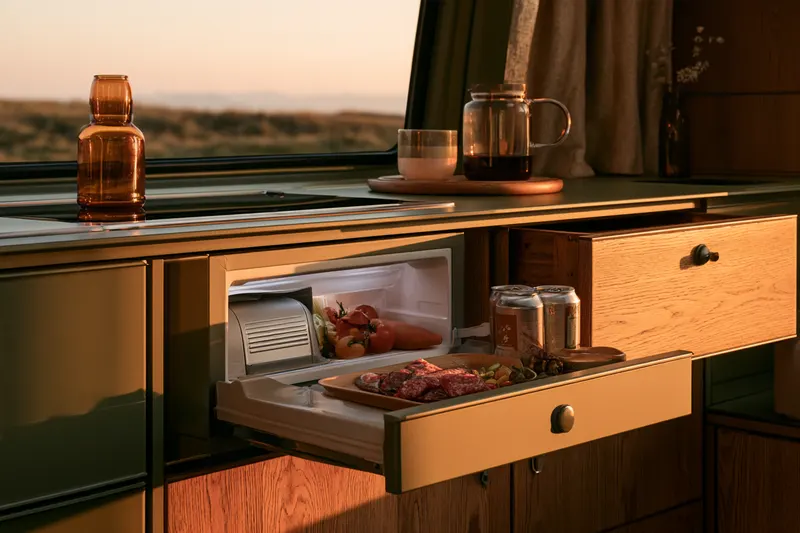
For a campervan you live in, a 12V compressor fridge is the only technology that makes sense: it cycles on and off, holds a set temperature, freezes properly and draws about 25–40 amp-hours a day in mild weather. Thermoelectric coolers run continuously, cannot freeze and can easily drain a battery bank in under 48 hours.
Which fridge type is best for a campervan?
A 12V compressor fridge. It is more efficient than absorption, does not need to be level or gas-vented, keeps cooling in hot weather and has a real freezer. Thermoelectric units cannot freeze and drag 85–140 amp-hours a day. Absorption fridges work well in static or marine use but must be level, well ventilated and lose efficiency in heat, which is why vanlifers choose a compressor.
Three technologies
| Compressor | Thermoelectric | Absorption | |
|---|---|---|---|
| Runs | Cycles on and off | Continuously | Gas, 12V or 230V |
| Cools | Freezes, holds set temp | 15–20 °C below ambient | Level and ventilated, efficient |
| 12V draw | 25–40 Ah/day mild | 85–140 Ah/day | Varies by mode |
| Best for | Van life | Day trips | Marine and static |
How much power does a 12V fridge use?
A well-insulated 45–55 litre compressor fridge draws roughly 25–40 amp-hours per day in mild weather and 60–90 amp-hours in desert heat. Thermoelectric coolers pull 3.5–5 amps continuously, landing at 85–140 amp-hours a day. The difference shapes the whole electrical budget of a conversion.
How much battery do you need for a fridge?
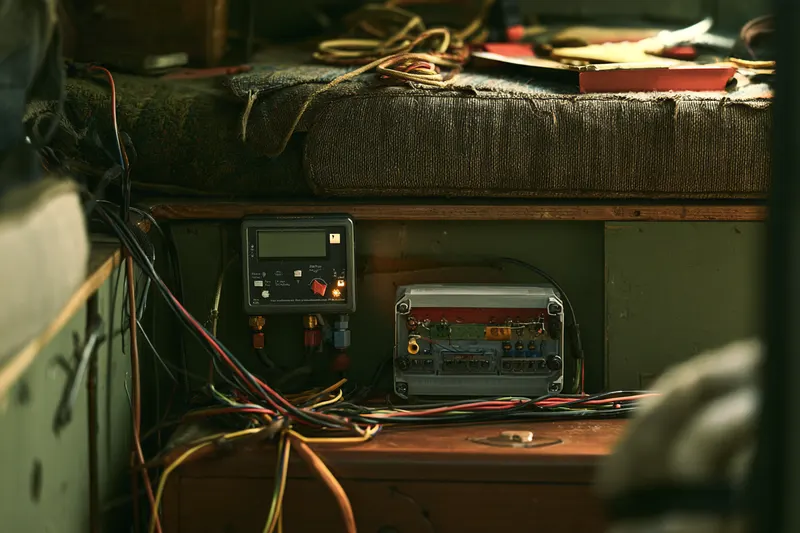
Count on the fridge as your biggest daily load after heating. A 100 Ah lithium battery plus matching solar covers a 25–40 Ah/day fridge with margin; desert use or a larger unit needs a bigger bank. Running a fridge off the starter battery only works for a day trip and risks a van that will not start.
Sizing your fridge
- Measure the cabinetCompressor fridges need airflow at the vents — leave the specified clearance.
- Pick the capacityA solo traveller copes with 30–40 L; couples usually want 40–60 L.
- Check the freezerA real −18 °C freezer compartment matters if you store meat or ice.
- Match your batterySize lithium capacity and solar so the fridge never drains the bank overnight.
What size fridge do you need for van life?
Around 30–40 litres suits a solo traveller, 40–60 litres works for couples, and 60 litres or more suits families or long off-grid stretches. Buy the largest that fits your cabinet and your power budget — compressor fridges need airflow at the vents, so follow the manufacturer's clearance.
Should you choose a single-zone or dual-zone fridge?
Dual-zone models run fridge and freezer compartments at different temperatures, which matters if you store frozen food or ice for long trips. Single-zone units are cheaper, lighter and simpler, and fine for weekend use — just remember they cannot freeze and chill simultaneously. Good insulation reduces the load on either, so pair the fridge choice with the right wall and ceiling build.
Can you run a campervan fridge off solar alone?
Yes, for most of the year, if the battery bank and panel size match the fridge's draw. A 25–40 amp-hour daily load needs roughly 200–300 W of solar coupled to 100 Ah of lithium to survive a cloudy day, plus a cold night. In winter, expect to top up from driving or shore power, and plan your overnight stops accordingly — the same logic as choosing where to park safely.
Questions we get asked
Which fridge type is best for a campervan?
A 12V compressor fridge. It is more efficient than absorption, does not need to be level or gas-vented, keeps cooling in hot weather and has a real freezer. Thermoelectric units cannot freeze and drain batteries.
How much battery do I need for a 12V fridge?
A 45–55 L compressor unit draws roughly 25–40 amp-hours per day in mild weather. A 100 Ah lithium battery plus matching solar covers that with margin; 60–90 Ah days in desert heat need a bigger bank.
Can I run a campervan fridge off the starter battery?
For a day trip, yes; for living in the van, no. Running a fridge continuously off the starter battery risks leaving you unable to start the engine — install a leisure battery or lithium bank instead.
What does absorption mean in a 3-way fridge?
It runs on gas, 12V or 230V. It is silent and works well in static or marine use, but it must be level, well ventilated and loses efficiency in heat — all reasons most vanlifers choose a compressor unit.
What size fridge do I need for van life?
Around 30–40 litres suits a solo traveller, 40–60 litres works for couples, and 60 litres or more suits families or long off-grid stretches. Buy the largest that fits your cabinet and your power budget.
What is the most common fridge mistake in a van build?
Buying the cheapest cooler and discovering on the first hot weekend that it cannot freeze and drains the battery. The second is cramping a compressor unit with no vent clearance, which makes it run flat out. Both are avoided by choosing a proper 12V compressor fridge and giving it room to breathe.
Buy a 12V compressor fridge with a real freezer compartment, size it to your cabinet and battery, and skip thermoelectric coolers for anything longer than a day trip.
References
- Van Life Kitchens: complete 12V fridge guide — Compression vs thermoelectric operation and power draw.
- EcoFlow: how to choose the right camping fridge — Compressor, thermoelectric and absorption compared, cooling capability and power.
- Epic Van Life: 12V van fridges compared — Realistic amp-hour consumption for compressor vs thermoelectric units.